
There are six main steps you’ll need to take to sell your home, everything from finding the right real estate agent and reviewing offers to negotiating a final sales price. Let’s take a closer look at each step and go over some tips you can use to sell your home more quickly.
Before you put your home up for sale, you must prepare the interior and exterior of your house. This means cleaning your home inside and out or even putting away some of your home decor. It could also mean working with a home stager who can reorganize your house so that your property shows at its best.
Clear Out Your Extra Stuff
If your home is bursting at the seams and you need more space, you may want to cut down on your stuff. This can mean recycling, donating or selling unwanted items. If you’ll be moving somewhere larger soon, it could mean renting storage to stow away furniture and other large items. Remember that the more space you make in your home before showing, the larger it will seem to the buyer.
Increase Your Curb Appeal
What’s the first thing a potential buyer will see when they pull up? It’s your curb appeal. Impressing them with well-maintained landscaping and fresh flowers is the first step to selling them on your home. Things as simple as a new layer of mulch and a handful of pretty plants can go a long way. If your front or back yards are choked with weeds, you may also consider removing them.

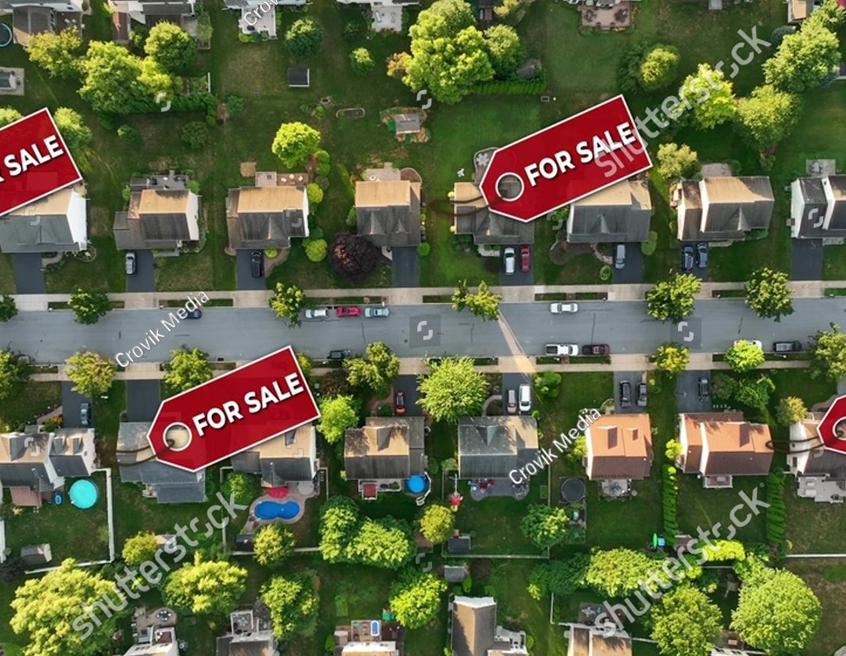
Your next task will be to find a real estate agent. While you might be tempted to go the “for sale by owner” (FSBO) route in order to avoid paying a commission fee, hiring a real estate professional can offer many benefits. A skilled real estate agent can help you sell your home faster and for the highest price. This might make paying that commission worth the investment.
Hiring an agent also allows you to list your home on the multiple listing service (MLS) so that buyers can find your property online. They schedule showings of your home, host open houses and help you set the right asking price. Not to mention, a good listing agent will give you advice on accepting an offer and fill out the necessary paperwork for the real estate transaction.
Interview Prospective Listing Agents
When you start the home selling process, consider setting up interviews where you can ask potential agents some questions. You might want to work with agents who know your community, are familiar with local home values and have experience selling properties like yours. Ask for references from any agent you interview. Then call those past clients to find out how responsible and effective the agents were.
Once you’ve found an agent, it’s time to list your home on the MLS. Doing this will make it available to a wider pool of potential home buyers who are searching online for houses in your community.
In order to complete your listing, your agent will ask you some questions about the property. They’ll ensure that the listing includes details such as the home’s total square footage, number of bedrooms and bathrooms, kitchen appliances and more. You can also use the following tips to help create the best possible listing for your house:
Set A Competitive Asking Price
Before listing, you’ll have to set the right asking price, which is something you’ll work on with your agent. Your agent will consider the prices of nearby homes similar to yours with a comparative market analysis (CMA). This will help you and your agent determine a fair price that should encourage offers from potential buyers while maximizing your profits.
Prep Your Home For Photos
You should also take the time to prepare your home for photos. This could mean replacing old worn-out rugs, painting faded walls, cleaning off counters or installing new kitchen curtains. If anything is broken, like a damaged wall or crooked cabinet door, fix it. Once your home is looking beautiful, you can schedule a professional photo session with a real estate photographer. High-quality photos are vitally important when listing your home online.
Fill Out Your Seller’s Disclosure
At this stage of the selling process, you’ll also want to complete a Seller’s Disclosure form. Being transparent with prospective buyers about issues with the property is essential. Work with your agent to properly disclose property issues so they don’t come as a surprise on a home inspection. If you don’t disclose a property defect, it could lead to the sale falling through, or worse, you could end up in court.
Get matched with a lender that will work for your financial situation. Get Started
The goal of listing your home is to receive an offer, or hopefully several, from buyers.
The buyer’s agent will typically send written offers to your listing agent. An offer will include the price that the buyers are willing to pay. In most markets, the price will usually be a bit lower than the listing price. However, if you are selling during a seller’s market – when demand is especially high for homes – you might receive offers from buyers who are willing to pay above listing price to nab your home.
You have three options when you receive an offer. You can accept the offer as-is, you can reject the offer outright or you can make a counteroffer. If an offer comes in at a price that is too low, you and your agent can send a counteroffer with a new price. You might go through several rounds of counteroffers before reaching an agreement.
Once you receive an offer you like, you can accept it. To do this, you and the buyers will sign a contract stating the sales price and the closing date on which the new homeowners will move in and you will vacate the property.
You should also work with your real estate agent on any contingencies with the offer. A contingency is something that must happen before the home sale becomes official. If certain requirements are not met with these contingencies, the buyers can withdraw their offer without suffering any financial penalty.
To prevent the sale from falling through, you should consider the following:
Be Prepared To Make Repairs Or Lower Your Price
One of the most important and common contingencies is a home inspection contingency. Most offers will state that the buyers have the right to hire a home inspector to tour the residence before the sale becomes official. An inspector will look for any problems with your home. If inspectors find any, the buyers can request that you fix them, provide them money to hire a contractor or deduct the cost of any repairs from the home’s final sales price.
However, if the inspector finds problems that the home seller refuses to fix, the buyers might have the right to walk away from the sale without losing any money. To keep the sale on track, you should be ready to make some repairs or reduce your asking price.
Get Ready For A Home Appraisal
Offers may also include an appraisal contingency. Before the home sale can go through, the mortgage lender working with the buyers will send an appraiser to your home to determine its current market value. Lenders want to make sure your home is worth at least as much as what the buyers are paying for it. If the appraisal comes in too low, it could force you to lower the final sales price to keep the sale alive.
Even though an appraisal is dependent on many factors, you can help your home receive a more accurate valuation by making some small preparations. For instance, cleaning up your living spaces, creating a list of home improvements you’ve made and being available to answer questions can help the appraiser recognize your home’s value.
After the home inspection and appraisal are complete, and if all goes well, it’s time to close the sale. Typically, you’ll do this at the office of your buyers’ title insurance provider, though you and the buyers can negotiate a different location. Sellers don’t always attend closings, either. They can sign the necessary documents before closing day. Closings can also be held virtually, which can save time for all the parties in a home sale.
Pay Your Closing Costs
You’ll also need to pay for your sellers’ closing costs. The biggest of these are typically the commissions of your real estate agent and the agent representing your buyers. This can run as high as 6% of your home’s purchase price. You’ll usually pay this out of the proceeds of your home sale.
You might also be responsible for paying closing costs related to taxes and title insurance.
What Is Real Estate Valuation? 3 Valuation Methods Explained
Real estate valuation is the process of determining what a property is worth at a specific moment in time. Valuations are also used by stakeholders in real estate, including buyers, sellers, mortgage lenders, investors and home insurance companies.
But when we think of terms commonly used to assess the worth of a piece of property (value, cost and price) how are those figures actually determined? How is value assessed, and what calculations are used to guide and govern real estate transactions?
Let’s take a look at the factors that can impact a real estate valuation, the three main real estate valuation methods and how they’re calculated.
What Does Valuation Mean In Real Estate?
A real estate valuation is a formal assessment of the value of a property and can serve a variety of needs in the real estate ecosystem, from securing a mortgage as a first-time home buyer to refinancing your home years later. There are several types of valuation used in different scenarios depending on the purpose of the valuation.
There are three types of value in real estate that are commonly used for assessing property: assessed value, fair market value and appraised value. Here’s what they mean and how they differ:
Real Estate Valuation Methods
When it comes to formal assessments of residential properties, there are three core methods of valuation in real estate, which each have different calculation models. Each method is typically conducted by a licensed appraiser, property valuer or surveyor:
While these three are the most common for residential properties, it should be noted that other methods can be used for commercial and industrial properties, such as the value-per-door approach or the cost-per-rentable square foot approach.
One of the most popular valuation methods is the sales comparison approach. In this model, an appraiser cites recently sold properties to justify the valuation of a home of commensurate size and quality. Using this method, the value of the property being assessed is based on the sales prices of comparable homes, adding or subtracting value for any adjustments.
For example, let’s say you’re comparing a 2,000-square-foot colonial-style home to a home of similar construction and size, but the comparable home’s features are upgraded. Significant upgrades to the kitchen like new appliances or custom cabinetry impact the value of the home. So, the colonial-style home under assessment might be valued lower than the comparable house based on the difference in the value of those upgrades.
The most common factors in the sales comparison approach are:
The second of three valuation methods is the cost approach, which is based on construction costs of building a similar home, while accounting for land value and depreciation. In the cost approach, a home’s valuation is calculated by estimating what it would cost to build a net new property of comparable size and quality from the ground up. Within this approach, there are two variations in methodology:
Either of these two methods of determining replacement value can be used for valuation in the cost approach.
The third valuation method for residential property is the income capitalization approach, also known as the income approach. This method is typically used for assessing investment or rental properties, such as vacation homes or apartment buildings, which are generally acquired to produce a return on investment.
The income capitalization approach is calculated by assigning a value to a property based on the estimated returns that property has the potential to produce. A property’s estimated returns are determined by dividing the property’s net operating income (NOI) by the capitalization rate.
Let’s take a closer look at NOI and capitalization rate.
Net Operating Income (NOI)
Net operating income is determined by taking the value of revenue generated by the property and subtracting any operating expenses such as taxes, maintenance and repairs and insurance fees.
For example, if an investment property is rented at $2,000 per month, it has the potential to generate $24,000 per year. If the sum of operating expenses for that same property comes to $7,500 (assuming $3,000 in annual property taxes, $1,500 in annual insurance fees and $3,000 in unexpected repair costs), then your net operating income would be $16,500.
Capitalization Rate
Capitalization rate, also known as cap rate, is the expected rate of return on a property. It’s determined by dividing net operating income by the property’s current value or purchase price.
Which Real Estate Valuation Is Most Accurate?
There are several approaches to real estate valuation for good reason: Each provides an accurate look at value for different use cases.
The best method for valuing residential property is usually the sales comparison method. It’s looked to as an accurate representation of residential property value because it first reviews recent, comparable sales in the area most similar to the subject property. It then provides a qualitative assessment of the property’s physical attributes in conjunction with broader market activity, including:
What Is The Most Popular Valuation Method?
The most popular valuation method for residential real estate is also the sales comparison method, which determines value based on comparable, recent sales local to the subject property.
It is rarer to find the cost approach in residential real estate valuations, though use cases do exist. Similarly, the income approach is typically reserved for rental and investment properties but is not used as commonly as the sales comparison method.
Is A Valuation The Same As An Appraisal?
Though both the term valuation and the term appraisal refer to ways of judging a property’s worth, they are not exactly the same. A valuation is the assessment of a specific property’s worth at a specific moment in time, which can be used for legal, financial or transactive purposes.
An appraisal is the formal process through which an estimate or opinion of a property’s value is determined, using one of three core methods: the sales comparison, cost or income capitalization approach. An appraisal is provided through a written report that details the factors that contributed to the resulting valuation of a property. Appraisals are a service provided by a licensed professional in exchange for a fee.
Real Estate Valuation FAQs
Let’s take a look at some frequently asked questions about property valuation.
What is a property valuation used for?
A property valuation is most commonly used for determining the fair market value of a property. Other common uses for a real estate valuation include:
How is assessed value different from appraised value?
If you’re looking at assessed value versus appraised value, there are a few differences. An assessment is generally used to determine property value for income tax purposes and is determined by a tax assessor. In contrast, the appraised value is determined by a professional appraiser and is used primarily by buyers, sellers and lenders during real estate transactions.
Do market conditions affect real estate valuation?
Yes, the current real estate market conditions will have an effect on the value of your property with any of the three valuation methods. No matter what method you use, the current market impacts how much your home is worth at a fixed point in time.
The Bottom Line
Real estate valuations are a vital part of the residential property ecosystem, providing a single source of truth for buyers, sellers, mortgage lenders, real estate investors and home insurance companies alike.
Understanding the key factors and calculations that determine the value of your home can help you prepare for the future, like considering ways to increase the value of your home now before you prepare to sell, or estimate valuation yourself so there are no surprises when your formal assessment arrives.